
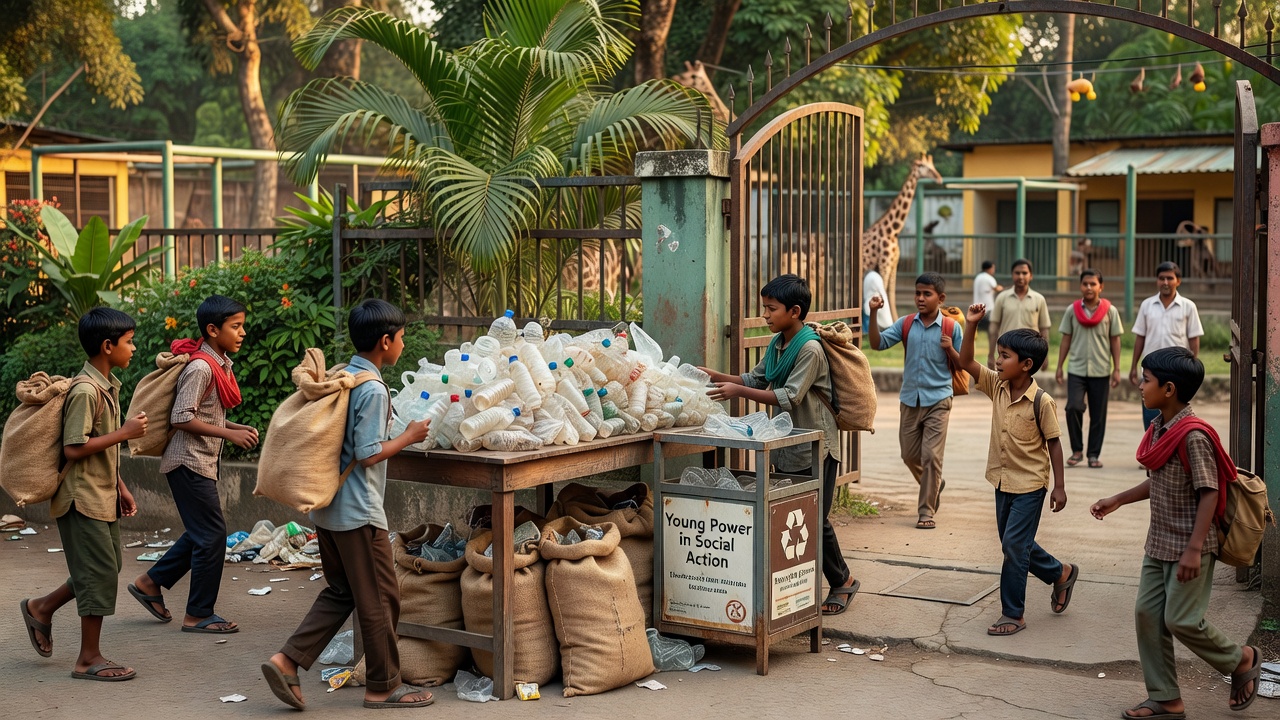
Chattogram Zoo in Bangladesh is letting visitors under 18 enter free when they bring in 100 grammes of discarded plastic. Launched on September 1, the campaign has drawn more than 400 young participants so far. It is a small incentive with a clear purpose: turn litter into material for recycling and get children thinking about where their waste goes.
How the Incentive Works
The scheme replaces the regular Tk 70 entry fee for children with a simple exchange. A young visitor who brings 100 grammes of used plastic gets in without paying. The mechanism is easy to understand, which matters for a programme aimed at children. The requirement asks for effort, not money, so a child who collects bottles from a neighbourhood alley or a school compound is rewarded for noticing the litter around them.
One participating student said that gathering plastic bottles from local alleys and school grounds showed him how much waste was scattered across the city. That observation is the core of the idea. Waste that people walk past every day becomes visible once they are asked to collect it.
Why Early Habits Matter
Civic campaigns often target adults, but children can influence household routines. When a child brings home a bag of collected bottles, the family conversation shifts from whether litter is someone else's problem to what can be done about it. Schools, families and local groups can reinforce that shift by keeping the habit going beyond a single visit to the zoo. The campaign's own framing suggests this is the goal: helping young people build responsible disposal habits and encouraging families and communities to keep their surroundings clean.
Lessons From Earlier Schemes
Chattogram Zoo is not the first local body to try this approach. In July 2023, Moulvibazar municipality opened a plastic trading booth where residents could sell used bottles and polythene for Tk 50 per kilogramme. The response was encouraging, with residents gathering sacks of plastic from streets and bushes. The booth was later discontinued, which shows the central difficulty: enthusiasm fades unless the system has steady funding, collection points and buyers. In 2024, the Dhaka North City Corporation also launched a buy-back initiative for discarded items as part of its dengue control efforts.
The zoo has addressed part of this challenge. It has signed a one-year memorandum of understanding with Young Power in Social Action (YPSA), which will collect, sort and recycle the plastic gathered at the zoo on a regular basis. Whether this produces measurable results, such as tonnage recycled or a sustained rise in participation, will become clearer over time. Officials will need to publish those figures to show whether the partnership works.
What Local Schemes Cannot Solve
Collection drives and recycling schemes are useful, but they cannot carry the full burden of plastic pollution. Bangladesh banned polythene bags in 2002 and introduced restrictions on other single-use plastics later, yet weak enforcement has allowed the problem to persist. Stronger enforcement of existing rules, reduction of unnecessary packaging by businesses, and accountability for polluters would address the supply of waste that local campaigns can only collect after the fact. Community incentives can change behaviour at the margins, but their lasting value depends on the policies that sit behind them.