
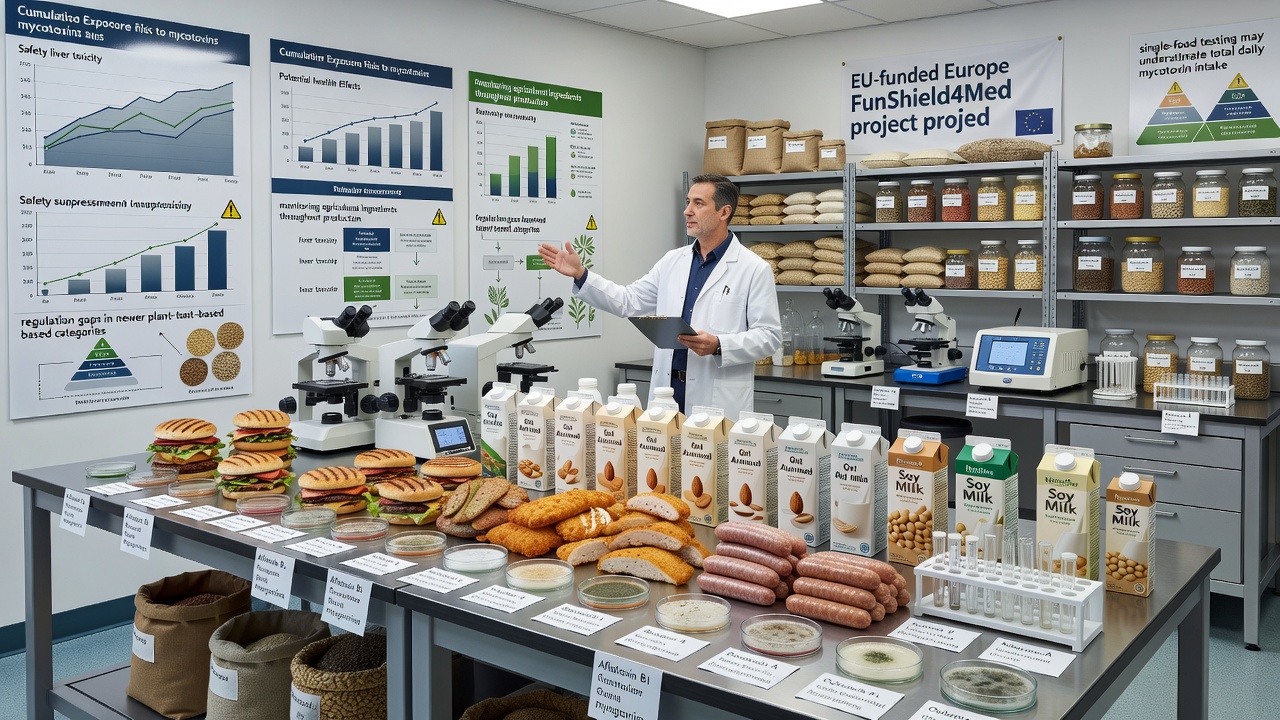
Researchers from the University of Parma and Cranfield University found mycotoxins, naturally occurring fungal compounds, in all 212 plant-based meat alternatives and beverages they sampled in the United Kingdom. Their study, published in Food Control, identified 19 different types, but the researchers reported that concentrations stayed below recommended European Union guideline levels. The findings are from UK products only, so they do not show what American shoppers are buying.
What the study tested
The team bought 92 plant-based meat alternatives, such as vegan burgers, vegetarian chicken pieces and vegan sausages, along with 120 plant-based beverages, including oat, almond and soy milk. Every sample contained at least one mycotoxin, and several contained more than one. Meat alternatives generally showed higher mycotoxin concentrations than beverages, according to the researchers.
Why these compounds appear in food
Mycotoxins are chemical substances made by certain fungi, including molds. They can form on crops during growing, harvesting and storage, and grains, legumes and seeds are common ingredients in plant-based manufacturing. Because the compounds come from the raw ingredients, they can show up even in carefully made products. Andrea Patriarca, a senior lecturer in mycology at Cranfield University, said the substances occur naturally in the food supply and cannot be completely eliminated.
Detection is not the same as danger
Finding a compound does not mean a product contains living mold or is automatically unsafe. Health effects depend on the specific compound, its concentration and how much a person eats over time. Some mycotoxins can damage the liver and kidneys, affect immune function and raise cancer risk at high exposure levels. The study did not establish that any tested product causes those conditions.
What the researchers are watching next
- Cumulative exposure among people who eat several plant-based products every day, since single-food testing may not reflect total intake.
- Monitoring of agricultural ingredients throughout production, because complex multi-ingredient foods can carry different contaminants.
- Regulation gaps for newer food categories, which currently lack established mycotoxin monitoring rules.
The work was conducted under the EU-funded Horizon Europe FunShield4Med project, and the two universities are continuing to study population exposure across different diets. For American readers, the study is a reminder that contamination testing and health risk assessment are separate questions, and that the second depends on how much of a food is eaten over time.