
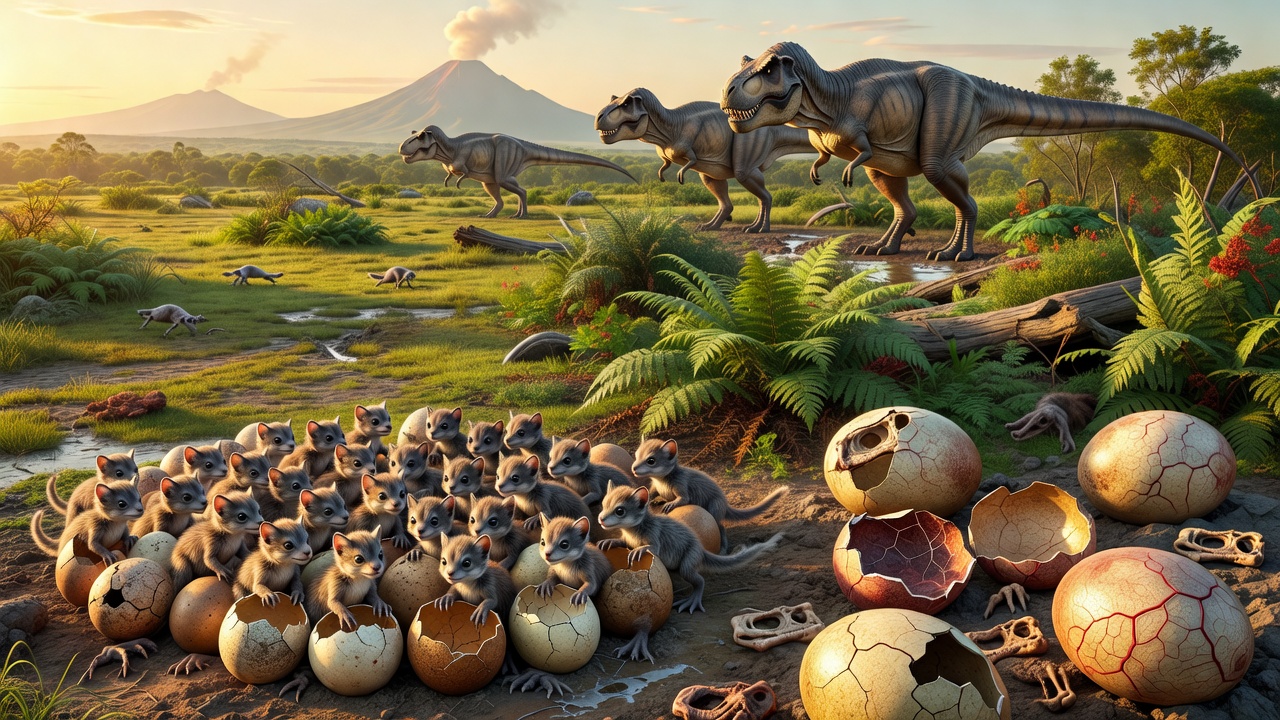
Tyrannosaurus rex is usually pictured as a towering predator, but its youngest members were small enough to fit in a house cat's bed. A study led by researchers including Nick Longrich of the University of Bath suggests that hatchlings were largely on their own from the start. The findings were published in the journal Biology on July 7, 2026.
How scientists measured the tiny fossils
The fossils had been sitting in museum collections, where they were identified as juvenile T. rex bones. To look closer, the team used the Canadian Light Source synchrotron at the University of Saskatchewan. A synchrotron produces intense light, including X-rays, that lets scientists examine the internal structure of a specimen at a very fine scale.
That imaging revealed blood vessels, growth patterns and changes in bone density inside the fossilized bones. Those details allowed the researchers to estimate how large the babies were, and they also confirmed that the specimens were young animals rather than embryos.
Why large litters point to hands-off parenting
According to the study, adult T. rexes could reach about 40 feet from nose to tail and weigh up to 15,000 pounds. Mothers reportedly laid between 30 and 100 eggs at a time. Biologists describe this approach as r-selection, in which an animal produces many offspring and invests little effort in raising each one.
Longrich's team argues that most hatchlings would have had to fend for themselves. In that scenario, many would have become prey before reaching adulthood, which helps explain why juvenile remains are rarely found.
Where T. rex parenting falls on the spectrum
Longrich suggests that T. rex parents likely provided more care than crocodiles and turtles, but less than modern birds. Rather than guarding and feeding their young closely, they may have offered a looser kind of protection. The researchers describe this as a free-range style of parenting, although the fossil evidence alone cannot show how individual parents behaved.